
How long does it take to make Savory Amaranth Microgreens Salad Bowl?
This recipe takes approximately 15 min total.
15 min
· Serves 2
· Updated July 18, 2026
See what's ready right now for delivery or pickup. See the ready-now list →
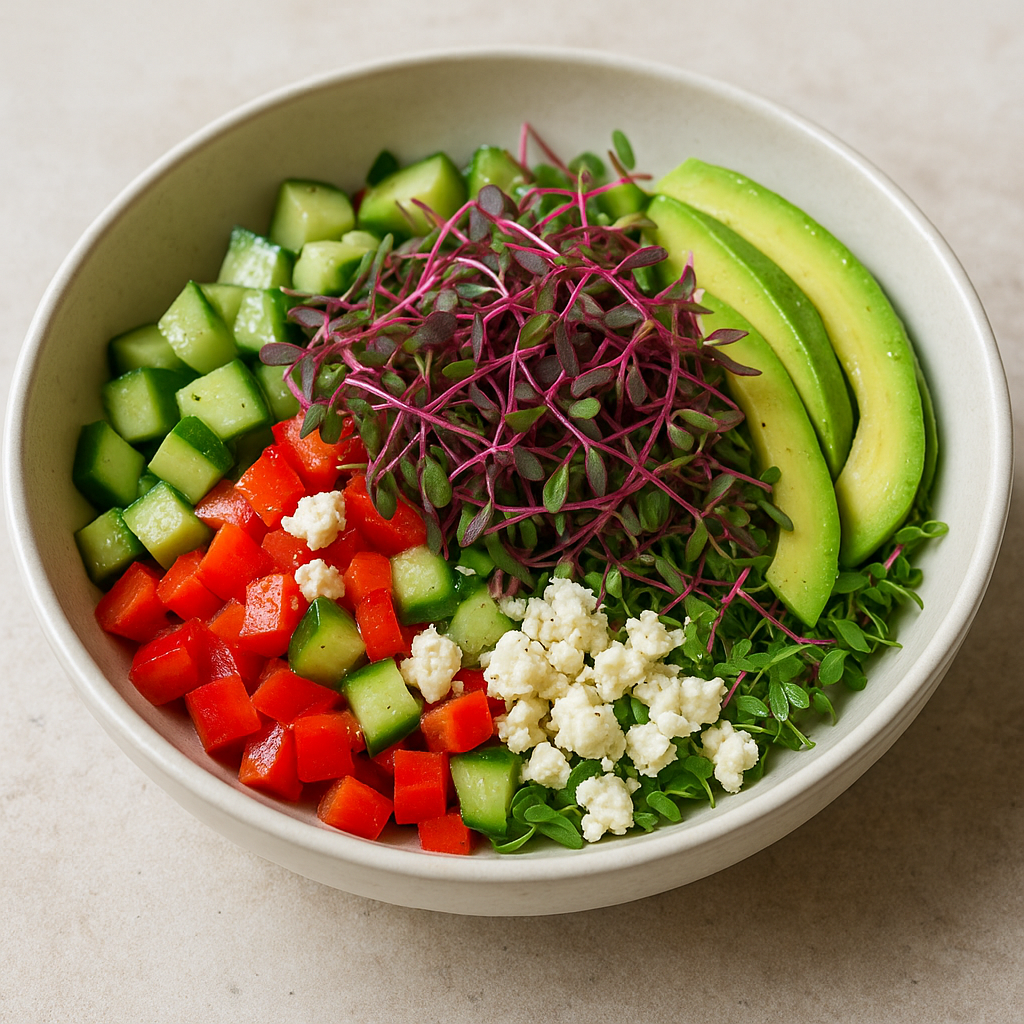
Amaranth microgreens are best added fresh as a finishing ingredient. This vibrant salad highlights the nutty flavor of amaranth microgreens, paired with fresh veggies and a zesty dressing. It's a nutritious meal inspired by the colorful offerings at Fonda San Miguel.
This recipe takes approximately 15 min total.
Amaranth microgreens work best as a fresh finishing ingredient, adding color, texture, and a just-cut flavor that stands out right before serving.
What are you making? Get a reviewed pairing grounded in what ChefPax can actually supply.
2 cups amaranth microgreens
1 medium cucumber, diced
1 red bell pepper, diced
1 avocado, sliced
1/4 cup feta cheese, crumbled
2 tablespoons olive oil
1 tablespoon lemon juice
Salt and pepper to taste
In a large bowl, combine the amaranth microgreens, cucumber, bell pepper, and avocado.
In a small bowl, whisk together olive oil, lemon juice, salt, and pepper.
Drizzle the dressing over the salad and toss gently until well coated.
Top with crumbled feta cheese.
Serve immediately for a fresh and nutrient-packed meal.
Amaranth microgreens are distinguished by their vibrant magenta and gold pigments, which come from betalain compounds. They are chosen by chefs primarily for visual impact and mild, earthy flavor. Amaranth grain has a stronger evidence base than amaranth microgreens specifically.
• Amaranth species have been studied for betalain pigment content, the same class of pigments found in beets and some other plants.
moderate evidence• Pigment intensity and flavor in amaranth microgreens vary significantly by variety and light exposure during growing.
strong evidence1. Yield performance, mineral profile, and nitrate content in a selection of seventeen microgreen species — Frontiers in Plant Science, 2023
2. Specialty Greens Pack a Nutritional Punch — USDA Agricultural Research Service, 2014