
How long does it take to make Parsley Microgreens Tabbouleh (15-Minute Lebanese Side Dish)?
This recipe takes approximately 15 min total.
15 min
· Serves 4
· Updated March 17, 2026
See what's ready right now for delivery or pickup. See the ready-now list →
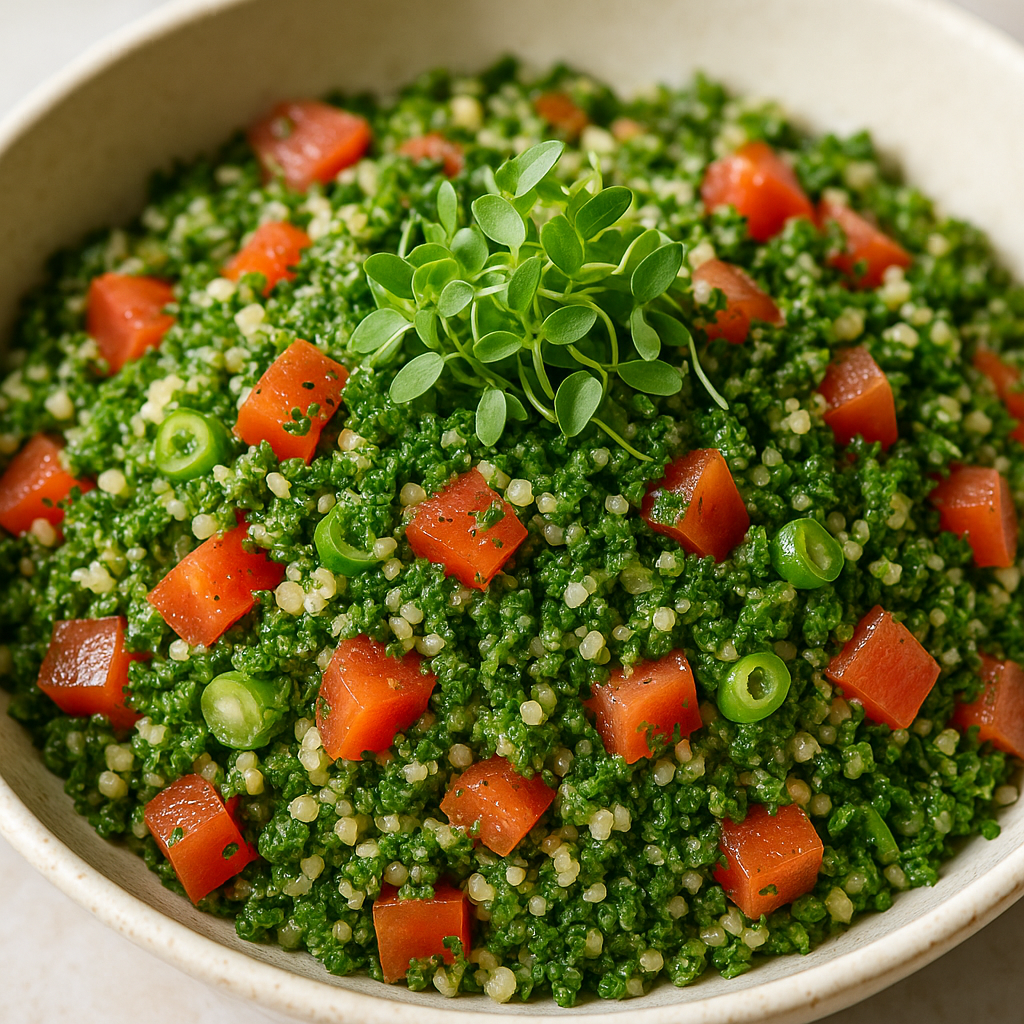
Parsley microgreens are best added fresh as a finishing ingredient. Classic Lebanese tabbouleh made with fine bulgur, tomatoes, and parsley microgreens instead of whole-leaf parsley for an ultra-concentrated herb flavor.
This recipe takes approximately 15 min total.
Parsley microgreens work best as a fresh finishing ingredient, adding color, texture, and a just-cut flavor that stands out right before serving.
What are you making? Get a reviewed pairing grounded in what ChefPax can actually supply.
1/2 cup fine bulgur wheat (or quinoa for GF)
2 cups parsley microgreens, finely chopped
2 medium tomatoes, diced
4 green onions, thinly sliced
3 tbsp lemon juice
3 tbsp olive oil
Salt & pepper
Soak bulgur in 1/2 cup cold water 10 minutes; drain and squeeze dry.
Combine bulgur, parsley microgreens, tomatoes, and green onions.
Dress with lemon juice and olive oil; toss well.
Season generously with salt and pepper; refrigerate 10 minutes before serving.
Parsley and parsley microgreens share the same aromatic and phytochemical profile, with research focused on the flavonoid apigenin, vitamin K content, and folate. They are used as a fresh finishing element on proteins, pastas, and composed plates.
• Parsley and parsley microgreens have been studied for flavonoid content, particularly apigenin, which is present in both mature and microgreen forms.
moderate evidence• Parsley is a recognized dietary source of vitamin K and folate, with microgreen concentrations studied in the broader microgreens nutrition literature.
moderate evidence• Aromatic and flavor characteristics in parsley microgreens vary by variety and harvest stage.
strong evidence1. Assessment of Vitamin and Carotenoid Concentrations of Emerging Food Products: Edible Microgreens — Journal of Agricultural and Food Chemistry, 2012
2. Microgreens: Production, Shelf Life, and Bioactive Components — Critical Reviews in Food Science and Nutrition, 2017
3. Yield performance, mineral profile, and nitrate content in a selection of seventeen microgreen species — Frontiers in Plant Science, 2023
4. Specialty Greens Pack a Nutritional Punch — USDA Agricultural Research Service, 2014
Grilled flank steak with a fresh chimichurri made from parsley microgreens — a faster, more intensely flavored take on the classic sauce.
Hearty Tuscan-style white bean soup with garlic, rosemary, and lemon, finished with a handful of raw parsley microgreens for freshness.