
How long does it take to make Shungiku Microgreen Salad with Citrus Vinaigrette?
This recipe takes approximately 15 min total.
15 min
· Serves 2
· Updated August 11, 2026
See what's ready right now for delivery or pickup. See the ready-now list →
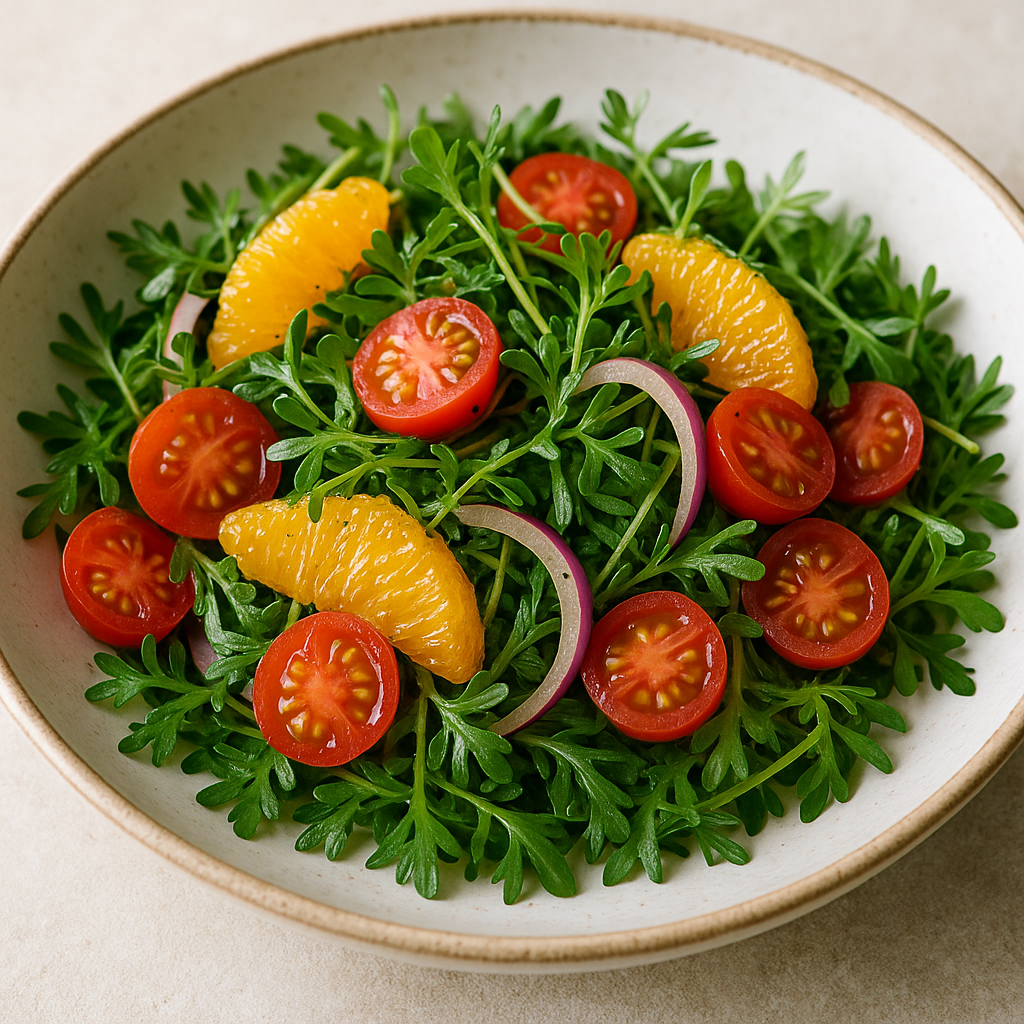
Shungiku microgreens are best added fresh as a finishing ingredient. This refreshing salad showcases the delicate flavor of Shungiku microgreens, complemented by a zesty citrus vinaigrette. Inspired by the vibrant dishes at Trattoria Lisina.
This recipe takes approximately 15 min total.
Shungiku microgreens work best as a fresh finishing ingredient, adding color, texture, and a just-cut flavor that stands out right before serving.
What are you making? Get a reviewed pairing grounded in what ChefPax can actually supply.
2 cups Shungiku microgreens
1 orange, segmented
1/2 cup cherry tomatoes, halved
1/4 cup red onion, thinly sliced
2 tablespoons olive oil
1 tablespoon apple cider vinegar
Salt and pepper to taste
In a large bowl, combine the Shungiku microgreens, orange segments, cherry tomatoes, and red onion.
In a small bowl, whisk together olive oil, apple cider vinegar, salt, and pepper to create the vinaigrette.
Drizzle the vinaigrette over the salad and toss gently to combine.
Serve immediately for a refreshing start to any meal.
Microgreens are young edible plants harvested shortly after germination. Published research reports that nutrient and phytochemical concentrations vary substantially by species, seed source, growing conditions, harvest stage, and storage, so crop-specific health claims should be interpreted cautiously.
• Microgreens have been studied as sources of vitamins, carotenoids, minerals, and other bioactive plant compounds.
moderate evidence• Nutrient composition cannot be assumed to be identical across microgreen varieties or production systems.
strong evidence• ChefPax presents this crop primarily for culinary flavor, texture, freshness, and menu variety rather than as a treatment or medical product.
strong evidence1. Assessment of Vitamin and Carotenoid Concentrations of Emerging Food Products: Edible Microgreens — Journal of Agricultural and Food Chemistry, 2012
2. Microgreens: Production, Shelf Life, and Bioactive Components — Critical Reviews in Food Science and Nutrition, 2017
3. Yield performance, mineral profile, and nitrate content in a selection of seventeen microgreen species — Frontiers in Plant Science, 2023
4. Specialty Greens Pack a Nutritional Punch — USDA Agricultural Research Service, 2014