Medicago sativa
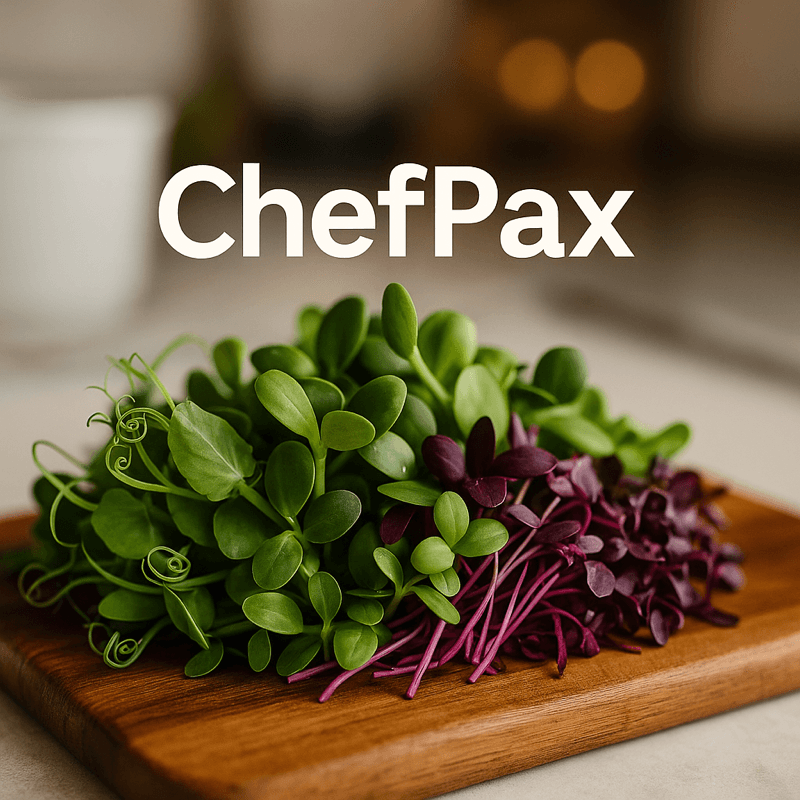
Alfalfa is the one crop in this lineup that needs careful language. ChefPax does not position alfalfa as a standard microgreen. We classify it as a sprout-style crop grown on hemp fiber media using rinse-and-drain sprout handling practices.
That format is intentionally specific: hemp-grown alfalfa sprouts, tray-grown alfalfa sprouts, chef alfalfa sprouts, and organic alfalfa sprouts Austin all describe the customer experience more accurately than calling it a live microgreen tray. Alfalfa grows quickly, stays mild and crisp, and belongs in cold applications where clean crunch matters.
ChefPax handles alfalfa with frequent rinsing, airflow management, refrigerated storage, and inspection for slime, discoloration, or off odors. Food-safety handling differs between sprouts and microgreens, so our public copy stays transparent and neutral.
Alfalfa Organic Sprouts are a sprout-style crop grown on hemp fiber media using rinse-and-drain handling. ChefPax does not market alfalfa as a standard microgreen; it is best for sandwiches, wraps, salads, and cold prep.
Alfalfa sprouts are young germinated alfalfa seeds valued for mild nutty-sweet flavor, crisp texture, and easy use in cold dishes. At ChefPax, alfalfa is classified as a sprout-style crop rather than a standard microgreen. We grow organic alfalfa sprouts on hemp fiber media with rinse-and-drain sprout handling practices, airflow management, refrigerated storage, and routine quality checks.
That positioning matters for both trust and clarity. Sprouts are usually harvested shortly after germination and are associated with warm, moist handling conditions, while microgreens are generally grown longer under light until a young leafy stage. Public health guidance treats raw sprouts as a category that needs careful handling, so ChefPax uses transparent language around seed sourcing, rinsing, refrigeration at 40°F or below, airflow, and discarding product that shows slime, discoloration, or off odors. In the kitchen, tray-grown alfalfa sprouts work best in sandwiches, wraps, salads, cold noodle bowls, avocado plates, and chef alfalfa sprouts service where clean crunch and mild flavor are the goal.
Move from recipe inspiration to ordering: choose a smaller chef tray for trials or a 10x20 format for service volume.
Alfalfa Organic Sprouts
sprout-style crop for sandwiches
Alfalfa Organic Sprouts
sprout-style crop for prep volume
Alfalfa sprouts are not the same as standard live-tray microgreens. Compared with microgreens, alfalfa is harvested earlier and handled with rinse-and-drain practices. Compared with jar sprouts, ChefPax positions alfalfa as hemp-grown, tray-grown alfalfa sprouts for chef use.
Chefs use alfalfa sprouts for clean volume, mild nutty-sweet flavor, and delicate crunch in cold applications. ChefPax handles alfalfa as a sprout-style crop with rinse/drain handling, airflow management, and refrigerated storage expectations.
Alfalfa is handled as a sprout-style crop, not a standard live-tray microgreen.
Organic alfalfa sprouts are grown on hemp fiber media using rinse-and-drain sprout handling practices.
Unlike standard live-tray microgreens, alfalfa is handled as a sprout-style crop with frequent rinsing, airflow management, refrigerated storage, drained containers, and routine checks for slime, discoloration, or off odors.
Read sprouts vs microgreensAlfalfa organic sprouts taste mild, nutty, and lightly sweet with a crisp texture. They are best in cold dishes: sandwiches, wraps, salads, grain bowls, and fresh garnish plates.
Alfalfa sprouts can contribute vitamins, minerals, chlorophyll, fiber, and fresh texture, but ChefPax keeps alfalfa copy focused on culinary use and handling. Public health agencies treat raw sprouts as a category that needs careful handling because sprouting conditions are warm and moist.
For a deeper look at vitamins and phytonutrients studied across varieties, see the microgreens nutrition guide.
Use the flavor wheel as a chef-facing shortcut from taste to products, recipes, and pairings.
Anise / licorice
Flavor pathSweet aromatic herbs for seafood, cocktails, eggs, and cream sauces.
Keep alfalfa organic sprouts refrigerated at 40°F or below. Use clean utensils, keep containers drained, avoid standing water, and discard any product that looks slimy, discolored, or has an off odor.
Full storage tips — container types, fridge placement, and shelf life by crop — are in the microgreens storage guide.
ChefPax Recipes
ChefPax recipe
10 min
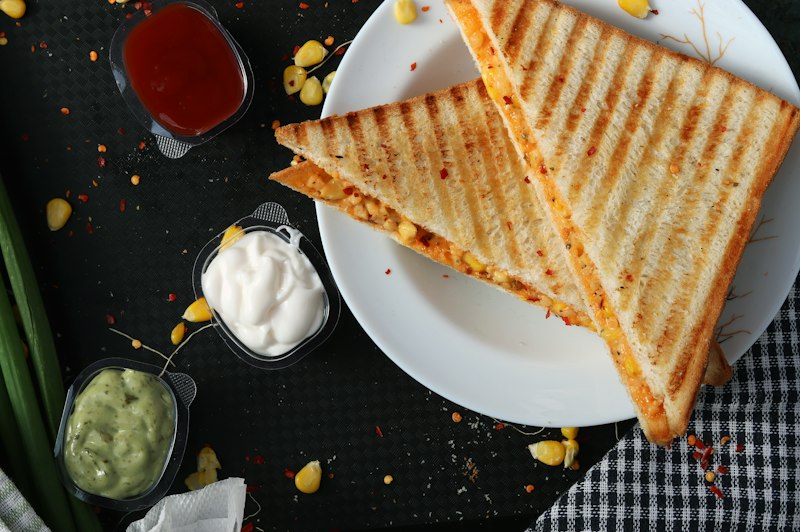
A crisp cold sandwich using alfalfa organic sprouts as a sprout-style crop for mild nutty crunch and fresh volume.
No. Alfalfa is generally classified as a sprout-style crop rather than a true microgreen. ChefPax grows alfalfa on hemp fiber media using rinse-and-drain handling practices.
ChefPax uses rinse-and-drain handling, airflow management, refrigerated storage, and spoilage checks for slime, discoloration, or off odors.
Alfalfa organic sprouts are best in cold applications such as sandwiches, wraps, salads, and fresh garnish plates.
Pick a plating goal and ChefPax will shape a tasting set around flavor, texture, and service use.
I'm plating seafood
Aromatic, citrus-friendly herbs for crudo, oysters, salmon, white fish, and raw bar plates.
Bronze Fennel
anise aroma and feathery heightCurled Chervil
soft French-herb liftPea Shoots
sweet height and clean stemsShiso
Japanese aromatic contrastBrowse ChefPax by the way chefs actually choose garnish: dish, service context, and flavor job.
Best microgreens for seafood
The best microgreens for seafood are bronze fennel, curled chervil, pea shoots, and shiso because they add aroma, height, and freshness without overwhelming delicate fish.
Best microgreens for steak
The best microgreens for steak are Chinese Mahogany, radish, wasabi mustard, and nasturtium because they cut richness with savory depth, pepper, or mustard-like heat.
Best garnish crops for cocktails
The best garnish crops for cocktails are bronze fennel, lemon basil, nasturtium, and shiso because they bring aroma and visual precision to the rim or glass.
Best mild microgreens for sandwiches
The best mild sandwich greens are alfalfa sprouts, broccoli microgreens, sunflower, and pea shoots because they add texture without dominating the filling.
Best specialty crops for chefs
The best ChefPax specialty crops for chefs are Chinese Mahogany, bronze fennel, curled chervil, shiso, nasturtium, and red amaranth.
Best herbs for French plating
The best microgreen herbs for French plating are curled chervil, bronze fennel, parsley, and sorrel because they bring restrained aroma and clean finishing flavor.
Best crops for spicy dishes
The best crops for spicy dishes are Rambo radish, wasabi mustard, nasturtium, and cilantro because they add heat, brightness, or fresh herbal contrast.
Looking for something else?
All ChefPax recipes →