
How long does it take to make Stir-Fried Noodles with Mahogany Microgreens?
This recipe takes approximately 20 min total.
20 min
· Serves 2
· Updated September 19, 2026
See what's ready right now for delivery or pickup. See the ready-now list →
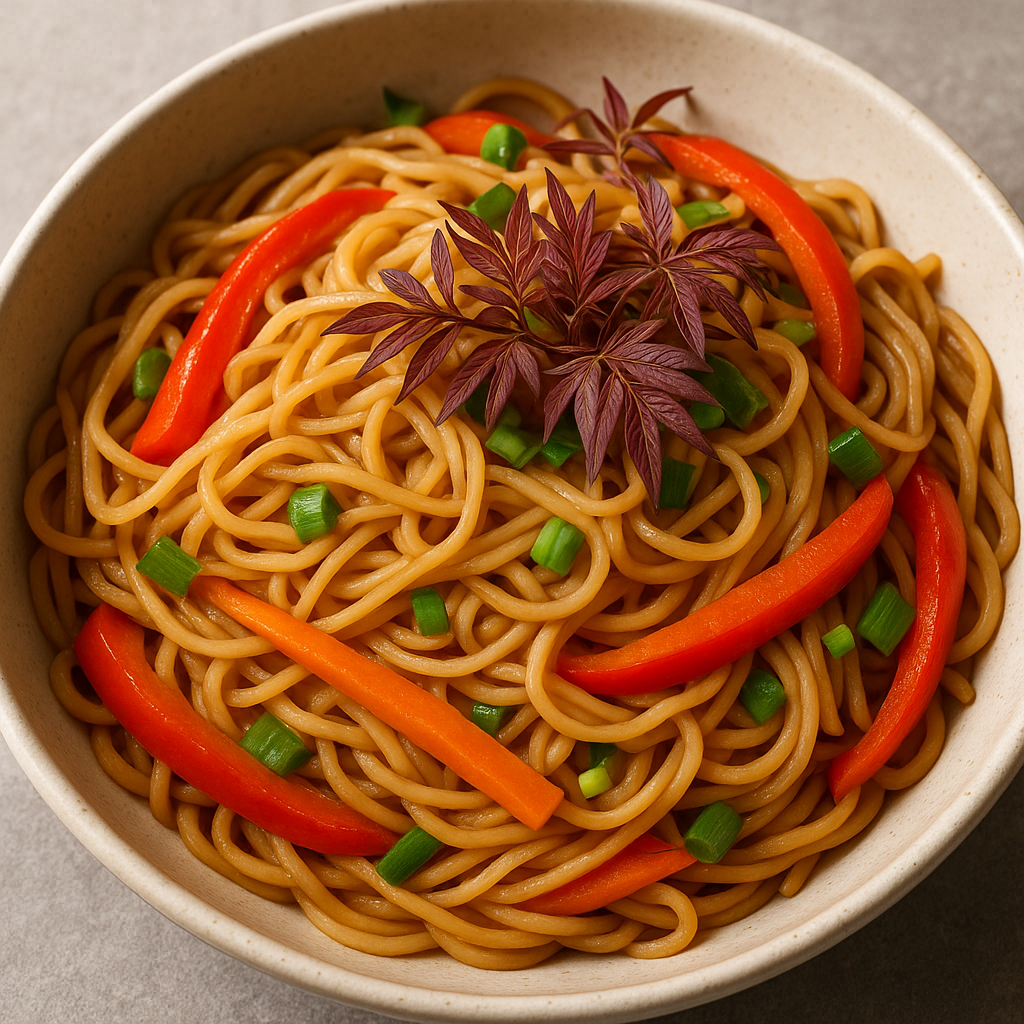
Chinese Mahogany microgreens are best added fresh as a finishing ingredient. This vibrant stir-fried noodle dish features the unique flavor of Chinese Mahogany microgreens, adding a fresh, peppery kick to your meal.
This recipe takes approximately 20 min total.
Chinese Mahogany microgreens work best as a fresh finishing ingredient, adding color, texture, and a just-cut flavor that stands out right before serving.
What are you making? Get a reviewed pairing grounded in what ChefPax can actually supply.
150g rice noodles
1 tablespoon vegetable oil
1 garlic clove, minced
1 bell pepper, sliced
1 carrot, julienned
2 green onions, chopped
1 cup Chinese Mahogany microgreens
2 tablespoons soy sauce
Cook the rice noodles according to the package instructions, drain and set aside.
In a large pan or wok, heat the vegetable oil over medium heat and sauté the minced garlic until fragrant.
Add the sliced bell pepper and julienned carrot, stirring for about 3-4 minutes until tender-crisp.
Add the cooked noodles and soy sauce to the pan, tossing everything together for another 2 minutes.
Remove from heat and fold in the Chinese Mahogany microgreens and chopped green onions before serving.
Microgreens are young edible plants harvested shortly after germination. Published research reports that nutrient and phytochemical concentrations vary substantially by species, seed source, growing conditions, harvest stage, and storage, so crop-specific health claims should be interpreted cautiously.
• Microgreens have been studied as sources of vitamins, carotenoids, minerals, and other bioactive plant compounds.
moderate evidence• Nutrient composition cannot be assumed to be identical across microgreen varieties or production systems.
strong evidence• ChefPax presents this crop primarily for culinary flavor, texture, freshness, and menu variety rather than as a treatment or medical product.
strong evidence1. Assessment of Vitamin and Carotenoid Concentrations of Emerging Food Products: Edible Microgreens — Journal of Agricultural and Food Chemistry, 2012
2. Microgreens: Production, Shelf Life, and Bioactive Components — Critical Reviews in Food Science and Nutrition, 2017
3. Yield performance, mineral profile, and nitrate content in a selection of seventeen microgreen species — Frontiers in Plant Science, 2023
4. Specialty Greens Pack a Nutritional Punch — USDA Agricultural Research Service, 2014