
How long does it take to make Spicy Fenugreek Microgreens Chickpea Salad?
This recipe takes approximately 20 min total.
20 min
· Serves 2
· Updated October 20, 2026
See what's ready right now for delivery or pickup. See the ready-now list →
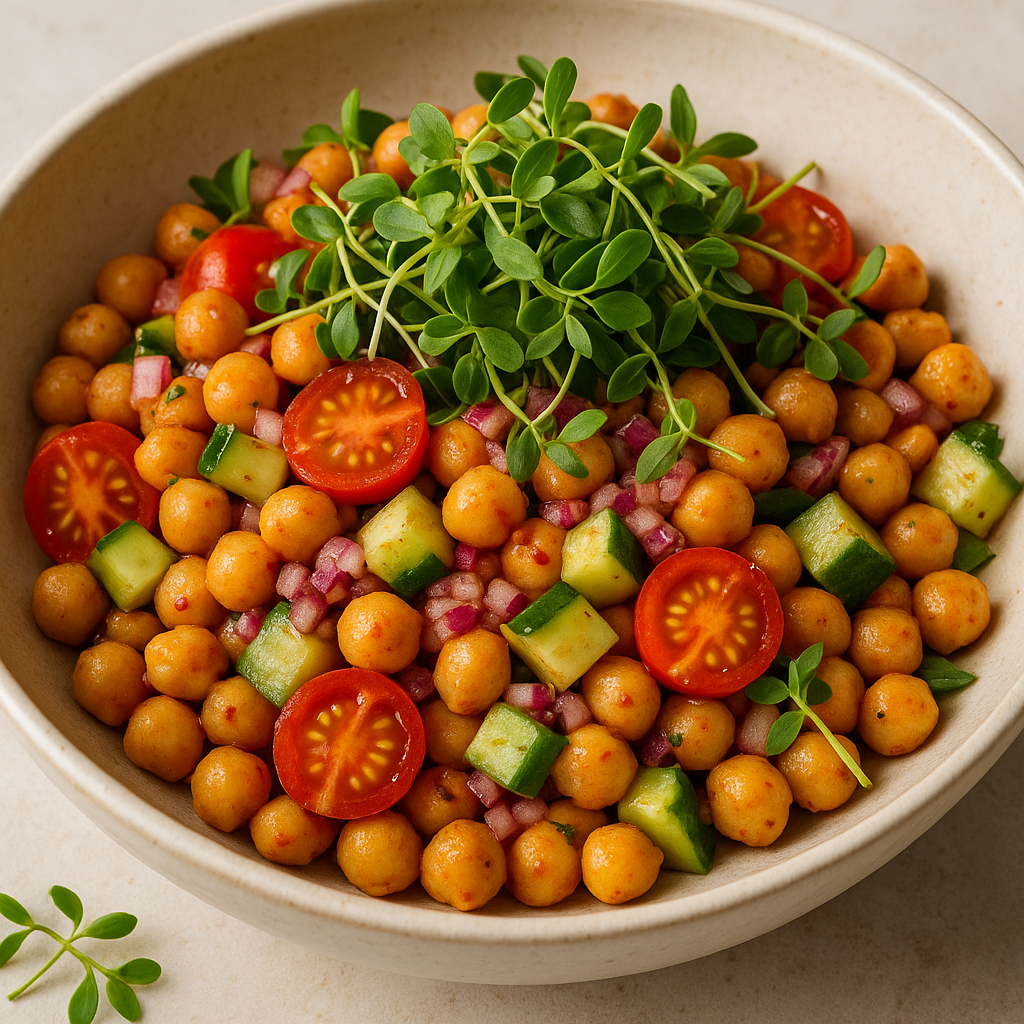
Fenugreek microgreens are best added fresh as a finishing ingredient. This vibrant salad combines protein-packed chickpeas with the unique flavor of fenugreek microgreens, making it a nutritious and hearty meal.
This recipe takes approximately 20 min total.
Fenugreek microgreens work best as a fresh finishing ingredient, adding color, texture, and a just-cut flavor that stands out right before serving.
What are you making? Get a reviewed pairing grounded in what ChefPax can actually supply.
1 can (15 oz) chickpeas, drained and rinsed
1 cup fenugreek microgreens
1/2 cup cherry tomatoes, halved
1/4 red onion, finely diced
1/2 cucumber, diced
2 tablespoons olive oil
1 tablespoon lemon juice
1/2 teaspoon smoked paprika
Salt and pepper to taste
In a large bowl, combine the chickpeas, cherry tomatoes, red onion, and cucumber.
Add the fenugreek microgreens to the bowl, gently mixing to incorporate.
In a small bowl, whisk together olive oil, lemon juice, smoked paprika, salt, and pepper.
Drizzle the dressing over the salad and toss gently until everything is well coated.
Serve immediately, or let it chill in the fridge for 10 minutes for flavors to meld.
Microgreens are young edible plants harvested shortly after germination. Published research reports that nutrient and phytochemical concentrations vary substantially by species, seed source, growing conditions, harvest stage, and storage, so crop-specific health claims should be interpreted cautiously.
• Microgreens have been studied as sources of vitamins, carotenoids, minerals, and other bioactive plant compounds.
moderate evidence• Nutrient composition cannot be assumed to be identical across microgreen varieties or production systems.
strong evidence• ChefPax presents this crop primarily for culinary flavor, texture, freshness, and menu variety rather than as a treatment or medical product.
strong evidence1. Assessment of Vitamin and Carotenoid Concentrations of Emerging Food Products: Edible Microgreens — Journal of Agricultural and Food Chemistry, 2012
2. Microgreens: Production, Shelf Life, and Bioactive Components — Critical Reviews in Food Science and Nutrition, 2017
3. Yield performance, mineral profile, and nitrate content in a selection of seventeen microgreen species — Frontiers in Plant Science, 2023
4. Specialty Greens Pack a Nutritional Punch — USDA Agricultural Research Service, 2014