
How long does it take to make Sautéed Quinoa with Swiss Chard Microgreens?
This recipe takes approximately 25 min total.
25 min
· Serves 2
· Updated June 26, 2026
See what's ready right now for delivery or pickup. See the ready-now list →
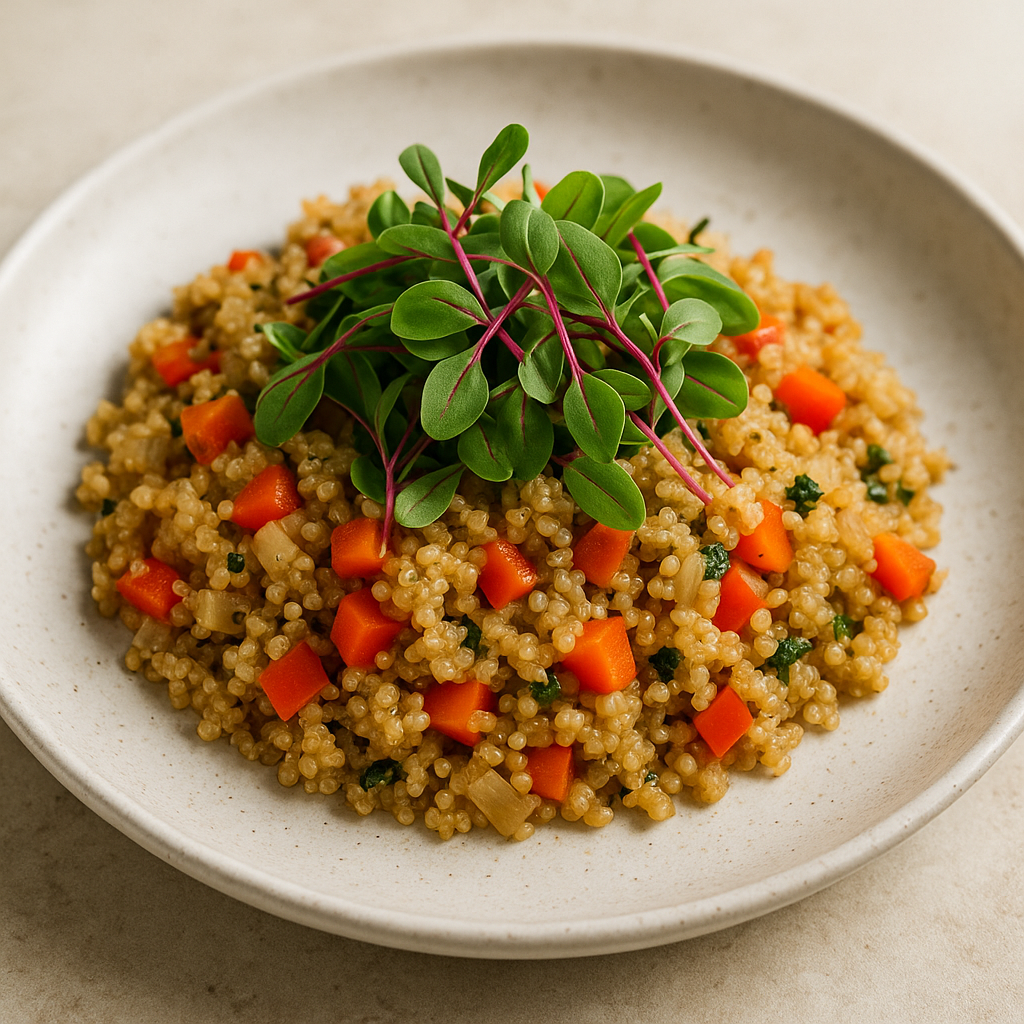
Swiss Chard microgreens are best added fresh as a finishing ingredient. A wholesome dish featuring quinoa sautéed with aromatic vegetables and finished with fresh Swiss Chard microgreens, making for a nourishing meal. Inspired by the healthy offerings from The Bull Pizza Co.
This recipe takes approximately 25 min total.
Swiss Chard microgreens work best as a fresh finishing ingredient, adding color, texture, and a just-cut flavor that stands out right before serving.
What are you making? Get a reviewed pairing grounded in what ChefPax can actually supply.
1 cup quinoa, rinsed
2 cups vegetable broth
1 cup bell peppers, diced
1/2 cup onion, chopped
1 cup Swiss Chard microgreens
2 tablespoons olive oil
Salt and pepper to taste
1 tablespoon balsamic vinegar
In a saucepan, combine quinoa and vegetable broth, bringing to a boil. Reduce heat, cover, and simmer for about 15 minutes until quinoa is fluffy.
While the quinoa cooks, heat olive oil in a skillet over medium heat, and sauté the bell peppers and onion until softened.
Once the quinoa is done, fluff it with a fork and add it to the skillet with the sautéed vegetables.
Stir in the Swiss Chard microgreens and balsamic vinegar, cooking briefly until the microgreens are just wilted.
Season with salt and pepper to taste before serving warm.
Swiss chard microgreens are distinguished by their vivid stem colors — red, yellow, and white — which come from betalain pigments, the same compound class found in amaranth and beets. They are used as a visual garnish, salad component, and smoothie green.
• Swiss chard and Swiss chard microgreens contain betalain pigments, the same class of compounds studied in amaranth, beets, and other brightly colored plants.
moderate evidence• Swiss chard is a recognized dietary source of vitamin K, magnesium, and beta-carotene (a Vitamin A precursor).
moderate evidence• Pigment intensity and nutrient content in Swiss chard microgreens vary by stem color variety and growing conditions.
strong evidence1. Exploring the Biochemical Profile of Beta vulgaris L.: A Comparative Study of Beetroots and Swiss Chard — Plants, 2025