
How long does it take to make Pea Microgreen Salad with Citrus Vinaigrette?
This recipe takes approximately 15 min total.
15 min
· Serves 2
· Updated September 14, 2026
See what's ready right now for delivery or pickup. See the ready-now list →
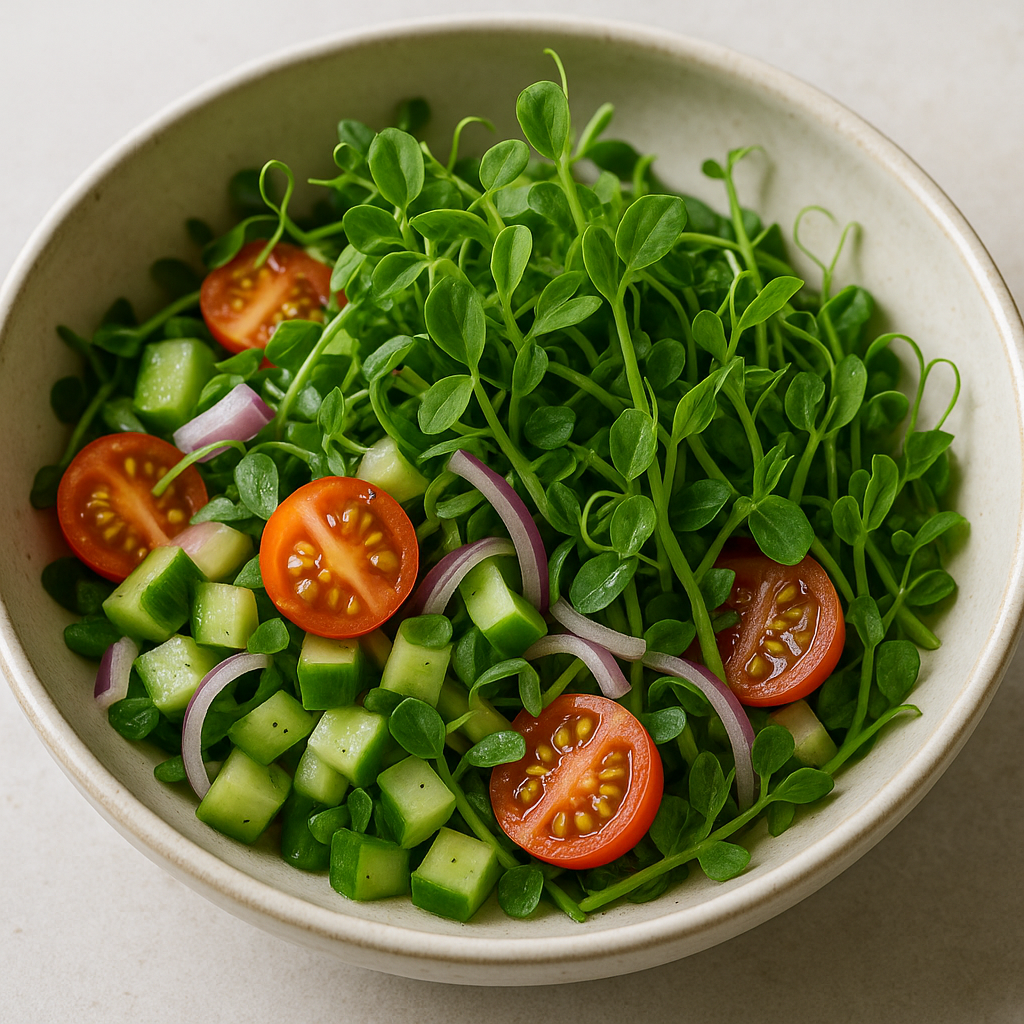
Pea microgreens are best added fresh as a finishing ingredient. This refreshing salad combines pea microgreens with citrus dressing, offering a nutritious explosion of flavors and textures.
This recipe takes approximately 15 min total.
Pea microgreens work best as a fresh finishing ingredient, adding color, texture, and a just-cut flavor that stands out right before serving.
What are you making? Get a reviewed pairing grounded in what ChefPax can actually supply.
2 cups of pea microgreens
1 small cucumber, diced
1/2 cup cherry tomatoes, halved
1/4 red onion, thinly sliced
1 tablespoon olive oil
1 tablespoon orange juice
1 tablespoon apple cider vinegar
Salt and pepper to taste
In a large bowl, combine the pea microgreens, diced cucumber, cherry tomatoes, and red onion.
In a small bowl, whisk together olive oil, orange juice, apple cider vinegar, salt, and pepper until well combined.
Drizzle the citrus vinaigrette over the salad and toss gently to coat.
Serve immediately for the freshest taste.
Enjoy as a side dish or light lunch!
Pea shoot microgreens are among the most versatile and broadly used microgreens in professional kitchens. They are known for their sweet, vegetal flavor, tender texture, and high visual yield per tray. Evidence on pea shoots typically focuses on protein content and vitamin profile relative to other legume sprouts.
• Pea shoots and young legume sprouts have been studied for their amino acid profile and vitamin C content.
moderate evidence• Flavor, texture, and nutrient content in pea shoots vary by variety, temperature, and harvest stage.
strong evidence• Pea shoots are commonly used raw as a salad base or garnish where cooking is not applied.
strong evidence1. Nutritional quality profiles of six microgreens — Scientific Reports, 2025