Microgreens are grown in a growing medium or mat, exposed to light, and harvested just above the root at the cotyledon or first true leaf stage. Sprouts are germinated in high-moisture conditions and are often consumed whole, including seed, root, and shoot.
What is the difference between microgreens and sprouts?
Microgreens are grown in a growing medium or mat, exposed to light, and harvested just above the root at the cotyledon or first true leaf stage. Sprouts are germinated in high-moisture conditions and are often consumed whole, including seed, root, and shoot.
Are alfalfa sprouts microgreens?
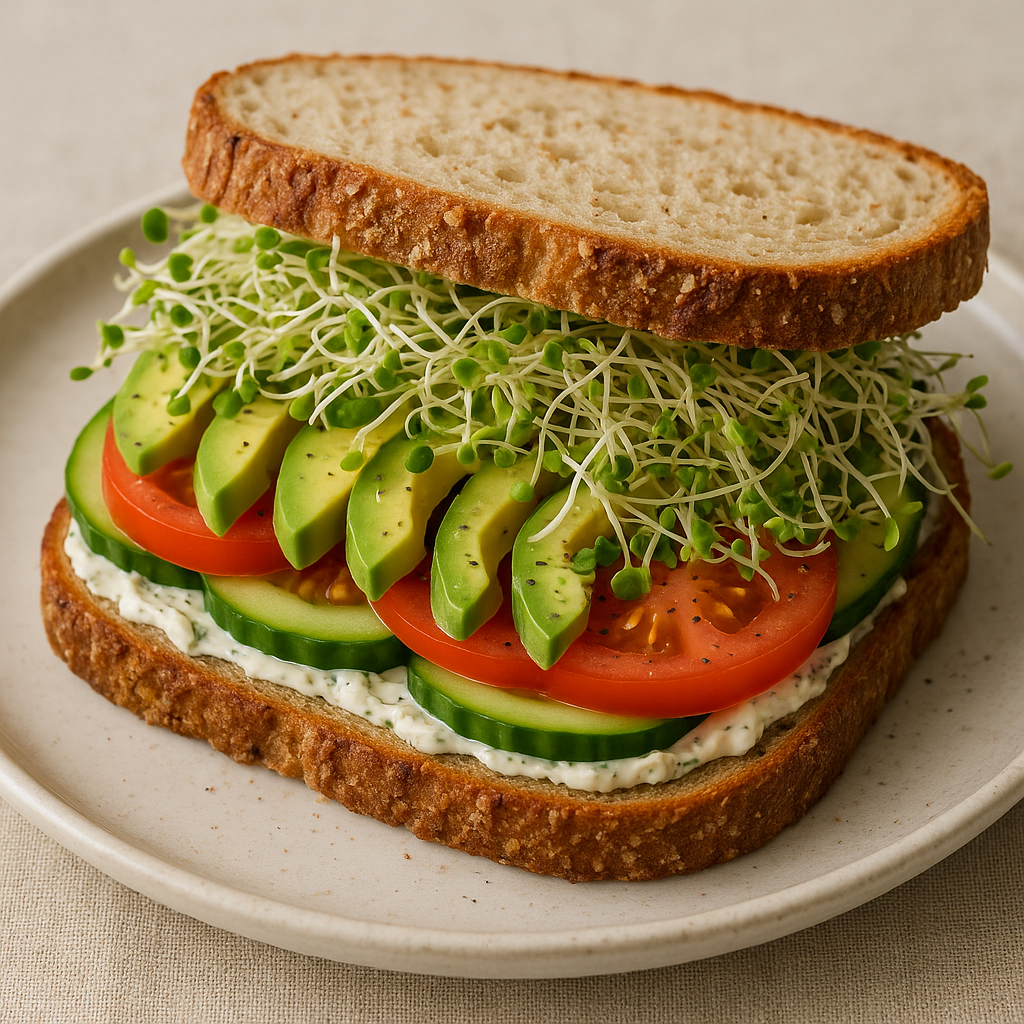
No. Alfalfa is generally classified as a sprout-style crop rather than a true microgreen. ChefPax grows alfalfa on hemp fiber media using rinse-and-drain handling practices instead of traditional soil or hydroponic live-tray microgreen methods.
Are sprouts grown differently than microgreens?
Yes. Sprouts are typically grown in high-moisture conditions and harvested shortly after germination, while most microgreens are grown longer under light until true leaves develop.
Are microgreens safer than sprouts?
Food-safety handling differs between sprouts and microgreens. Public health guidance has historically identified raw sprouts as a higher-risk category because of warm, moist germination conditions. Proper sanitation, seed sourcing, rinsing, refrigeration, and airflow management are important for both crop types.
How does ChefPax handle sprout-style crops?
ChefPax handles sprout-style crops with clean containers, potable water, rinse-and-drain handling, airflow management, refrigerated storage at 40°F or below, and checks for slime, discoloration, or off odors.
Are microgreens more nutritious than sprouts?
Studies including Xiao et al. (2012) found that many microgreens contain higher concentrations of vitamins C, E, and K than their mature vegetable counterparts. Sprouts and microgreens differ in nutrient profile based on the growth stage at harvest.
Do microgreens and sprouts taste the same?
Microgreens develop more concentrated flavor during the light-growth phase than sprouts, which tend to be milder and more watery. A sunflower microgreen tastes distinctly nuttier than a sunflower sprout.
How microgreens are grown
Microgreens are grown in a substrate — typically soil, coco, or a fiber mat — and placed under grow lights until the cotyledons and, for many crops, the first true leaves are developed. They are harvested by cutting the stem just above the root, which remains in the growing medium.
ChefPax grows microgreens in a controlled indoor environment in Manor, TX, using environmental sensors to monitor temperature, humidity, and light — ensuring consistent quality across each tray.
How sprouts are grown
Sprouts are germinated seeds grown in high-moisture conditions and are typically ready in 3–7 days. They are often consumed whole: seed, root, hull, and stem. Common sprout varieties include alfalfa, mung bean, clover, and lentil.
The FDA has issued guidance specifically for sprout operations because sprouting conditions can also support pathogen growth if contamination is present. Microgreens and sprouts therefore need different handling language, sanitation practices, and customer education.
Sprout-style alfalfa at ChefPax
ChefPax offers alfalfa as a sprout-style crop, not as a standard microgreen. Our alfalfa is grown on hemp fiber media using rinse-and-drain sprout handling practices, frequent airflow management, and refrigerated storage.
That distinction matters for trust and menu language: hemp-grown alfalfa sprouts, tray-grown alfalfa sprouts, chef alfalfa sprouts, organic alfalfa sprouts Austin, and rinse-and-drain sprout handling all describe the format more accurately than calling alfalfa a standard microgreen tray.
Nutrition: microgreens vs sprouts
Research by Xiao et al. (2012) found many microgreens contain higher concentrations of vitamins C, E, K, and carotenoids than their mature vegetable counterparts. Sprouts have their own nutritional profile, but the extended light-growth phase of microgreens allows for chlorophyll development and further accumulation of secondary metabolites.
Flavor comparison
Microgreens generally have more developed, concentrated flavor than sprouts of the same plant. A sunflower microgreen has a notably nutty flavor that a sunflower sprout lacks. Radish microgreens deliver a distinct horseradish-like heat; radish sprouts are milder. The light-growth phase drives flavor compound development in microgreens.
Shop microgreens — Austin delivery
ChefPax delivers live microgreen trays across Austin and offers alfalfa as a clearly labeled sprout-style crop, handled separately from standard microgreens.