
How long does it take to make Spicy Amaranth Microgreen Tacos?
This recipe takes approximately 25 min total.
25 min
· Serves 2
· Updated September 14, 2026
See what's ready right now for delivery or pickup. See the ready-now list →
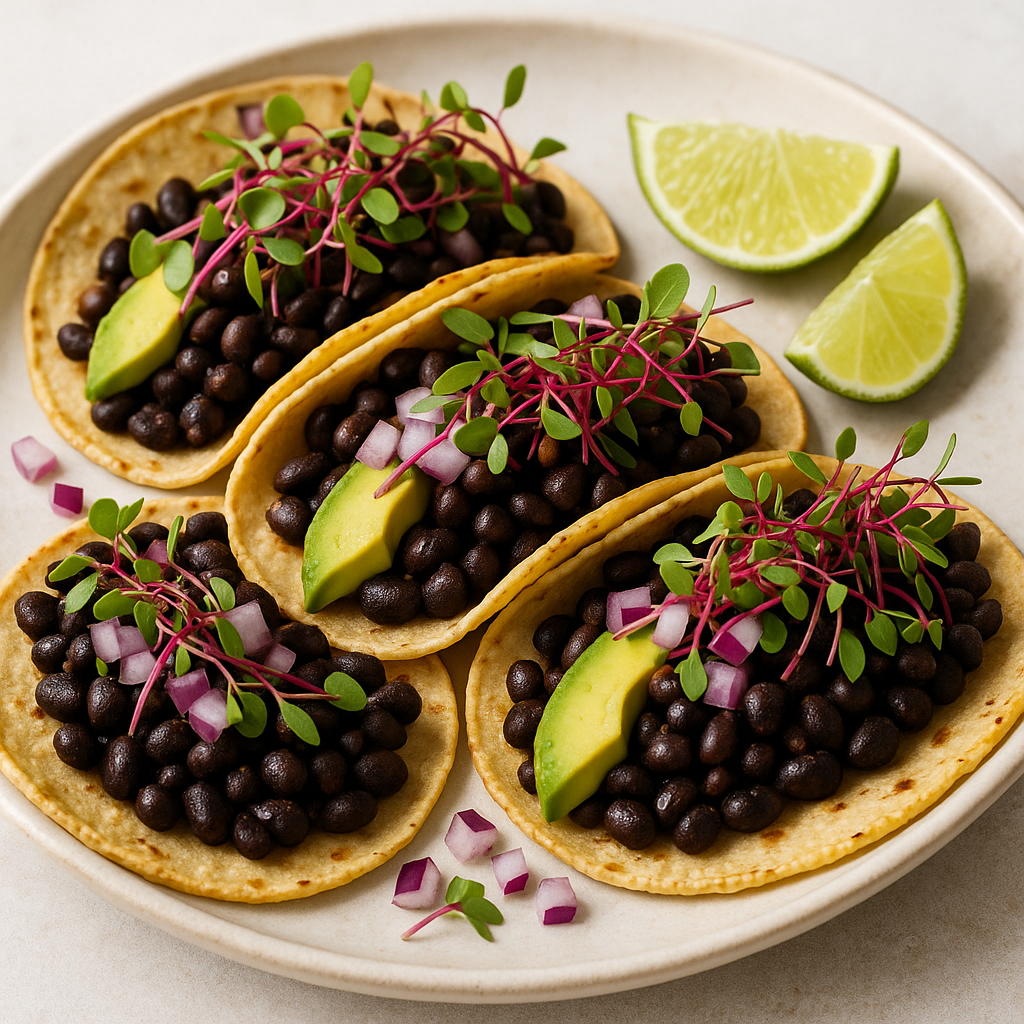
Amaranth microgreens are best added fresh as a finishing ingredient. These flavorful tacos feature a zesty bean filling topped with crunchy amaranth microgreens for a fresh, vibrant bite.
This recipe takes approximately 25 min total.
Amaranth microgreens work best as a fresh finishing ingredient, adding color, texture, and a just-cut flavor that stands out right before serving.
What are you making? Get a reviewed pairing grounded in what ChefPax can actually supply.
8 small corn tortillas
1 can black beans, rinsed and drained
1 teaspoon chili powder
1/2 teaspoon cumin
1 avocado, sliced
1 cup amaranth microgreens
1/4 cup red onion, diced
Lime wedges for serving
In a skillet, heat the black beans over medium heat and season with chili powder and cumin, cooking for about 5 minutes until warmed through.
Warm the corn tortillas in a separate pan or microwave until pliable.
Assemble tacos by placing a generous spoonful of the spiced beans on each tortilla.
Top with avocado slices, diced red onion, and a handful of amaranth microgreens.
Serve with lime wedges on the side for a zesty finish.
Amaranth microgreens are distinguished by their vibrant magenta and gold pigments, which come from betalain compounds. They are chosen by chefs primarily for visual impact and mild, earthy flavor. Amaranth grain has a stronger evidence base than amaranth microgreens specifically.
• Amaranth species have been studied for betalain pigment content, the same class of pigments found in beets and some other plants.
moderate evidence• Pigment intensity and flavor in amaranth microgreens vary significantly by variety and light exposure during growing.
strong evidence1. Yield performance, mineral profile, and nitrate content in a selection of seventeen microgreen species — Frontiers in Plant Science, 2023
2. Specialty Greens Pack a Nutritional Punch — USDA Agricultural Research Service, 2014