
How long does it take to make Nasturtium Microgreen Salad Delight?
This recipe takes approximately 15 min total.
15 min
· Serves 2
· Updated March 29, 2026
See what's ready right now for delivery or pickup. See the ready-now list →
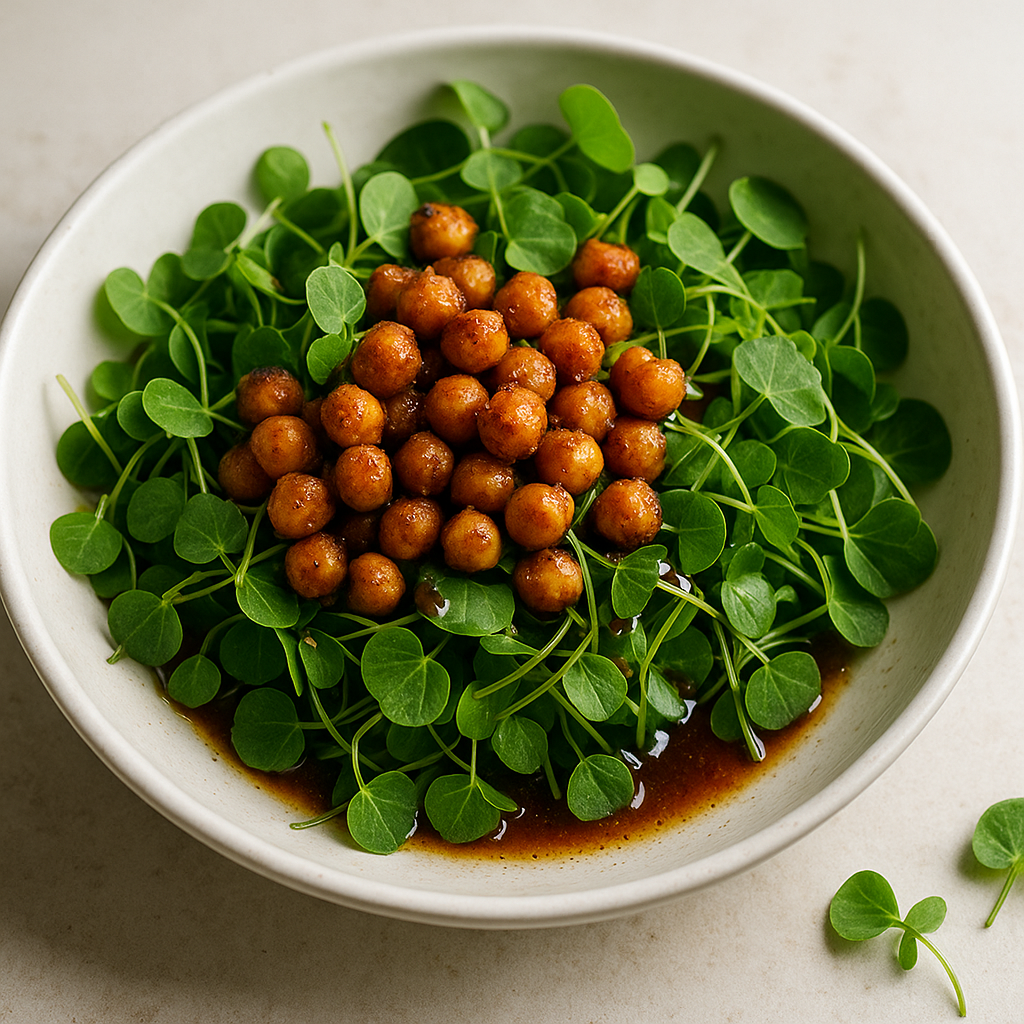
Nasturtium microgreens are best added fresh as a finishing ingredient. A refreshing salad bursting with flavor, this dish highlights the peppery taste of nasturtium microgreens paired with roasted chickpeas and a tangy vinaigrette.
This recipe takes approximately 15 min total.
Nasturtium microgreens work best as a fresh finishing ingredient, adding color, texture, and a just-cut flavor that stands out right before serving.
What are you making? Get a reviewed pairing grounded in what ChefPax can actually supply.
2 cups nasturtium microgreens
1 can (400g) chickpeas, drained and rinsed
1 tablespoon olive oil
1/2 teaspoon smoked paprika
1/4 teaspoon salt
1/4 teaspoon black pepper
2 tablespoons balsamic vinegar
1 tablespoon honey or maple syrup
Preheat your oven to 400°F (200°C). Toss the chickpeas with olive oil, smoked paprika, salt, and black pepper, then spread on a baking sheet.
Roast the chickpeas for about 15 minutes or until crispy, shaking the pan halfway through.
In a bowl, whisk together balsamic vinegar and honey/maple syrup to create the vinaigrette.
In a serving bowl, layer the nasturtium microgreens and top with the roasted chickpeas.
Drizzle the vinaigrette over the top and toss gently before serving.
Nasturtium and nasturtium microgreens deliver distinctive peppery heat through glucosinolate-derived compounds — the same chemical class responsible for heat in radish and mustard microgreens. They are used as edible garnishes, flavor accents on proteins and composed plates, and as a visual element with their vivid green color.
• Nasturtium plants and microgreens contain glucosinolates and isothiocyanates — the same compound class found in brassica crops like radish and broccoli microgreens.
moderate evidence• Peppery heat intensity in nasturtium microgreens is linked to glucosinolate concentration, which varies by growing conditions and harvest timing.
moderate evidence• Nasturtium has been studied for vitamin C content in both the leaves and flowers.
limited evidence1. Nutritional Composition and Antioxidant Capacity in Edible Flowers: Characterisation of Phenolic Compounds by HPLC-DAD-ESI/MSn — International Journal of Molecular Sciences, 2015